 XRメモランダム
 How to Update an “Open Secret” in VTuber Culture
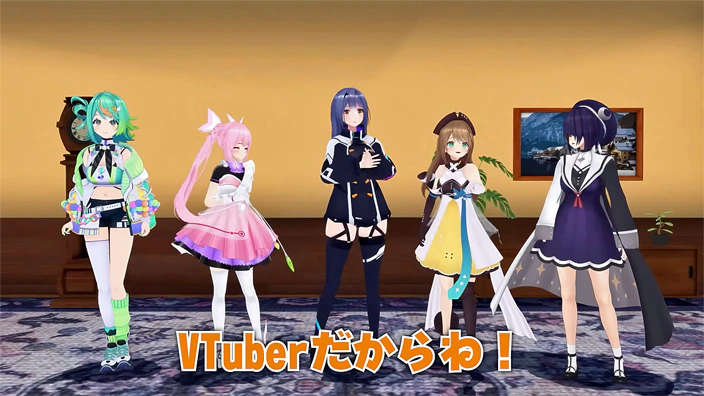
As VTuber culture and technology have evolved, more and more VTubers now perform using fully realized 3D avatars.
These 3D VTubers do more than just stream games or chat on YouTube and Twitch. They also leverage their 3D avatars to hold 3D live concerts and upload dance videos to platforms like YouTube Shorts and TikTok.
Thanks to increasingly sophisticated 3D avatars and advances in motion-capture tech, VTuber dance performances are approaching the expressive quality of real-world performers. Combine that with a VTuber’s visuals and personality, and some fans might even say, “I actually enjoy it more than traditional dance performances.”
At the same time, one question continues to surface among fans whenever 3D performances — especially dance performances — are discussed:
“Is the person dancing behind this avatar actually the VTuber?”
It’s become something of an open secret that motion actors sometimes perform in place of the VTuber themselves during 3D concerts and short-form dance videos.
Personally, I think if using motion actors improves the quality of the content or reduces the burden on performers, then creators should feel free to embrace it. The ability to combine different talents is one of the unique strengths of the VTuber medium.
However, in recent years we’ve also seen an increase in VTubers whose dance abilities are a major part of their appeal, such as hololive DEV_IS’s Todoroki Hajime(轟はじめ) from ReGLOSS, Mizumiya Su(水宮枢) from FLOW GLOW, and PROJECT IM@S vα-liv’s Cosmo Kamiizuru(上水流宇宙).
As this trend continues, keeping the identity of the dancer intentionally ambiguous may soon do more harm than good.
So in this article, I want to examine the advantages and disadvantages of using motion actors in VTuber content and explore how the industry might approach the issue going forward.
Table of Contents
Before We Dive In…
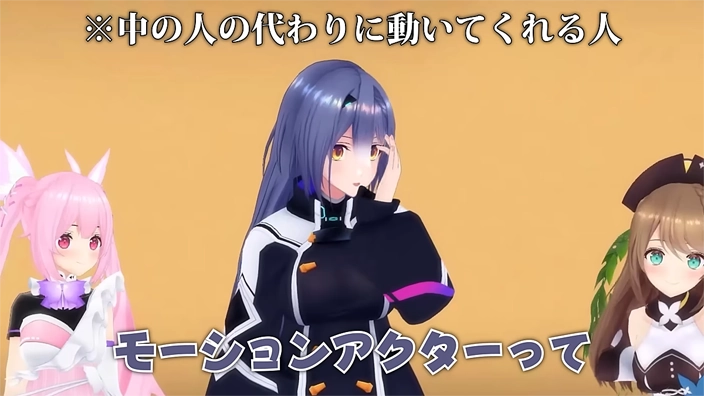
The image referenced here comes from a video by Aogiri High School titled:
“Can You Identify the Impostor Just by Their Movements?”
The video tackles the subject of motion actors in VTuber content right from the start, in a way that is very characteristic of Aogiri High School’s style.
The thumbnail was so quintessentially “Aogiri” that I chose to show a screenshot rather than embedding the video directly. If you’re interested in the topic, I highly recommend checking out the full video — click the text link or the image to watch.
The Pros and Cons of Using Motion Actors
Let’s start by examining the benefits and drawbacks of having professional motion actors perform dance routines for VTubers.
- More Consistent and Higher-Quality Performances
- Reduced Physical and Mental Strain on VTubers
- Expanded Creative Possibilities
1. More Consistent and Higher-Quality Performances
This is undoubtedly the biggest advantage.
No matter how hardworking a VTuber may be, matching the physical abilities of a professionally trained dancer or motion actor is extremely difficult. By having experienced performers handle demanding choreography, the quality of what viewers ultimately see — the finished performance, or even the “work” itself — can improve dramatically.
2. Reduced Physical and Mental Strain on VTubers
As of 2026, a VTuber’s primary activities still revolve around livestreaming and video production on platforms like YouTube and Twitch. Adding dance practice and motion-capture recording on top of that can quickly create an overwhelming schedule.
If dance preparation starts interfering with streaming activities, the situation becomes counterproductive. There is also a genuine risk of injury or health issues if someone without extensive athletic training suddenly begins performing demanding choreography.
Delegating these responsibilities to professional motion actors can significantly reduce a VTuber’s workload and help support a longer, healthier career.
3. Expanded Creative Possibilities
Professional motion actors can perform not only advanced dance routines but also physically demanding actions like backflips, aerial flips, and other acrobatic movements.
The ability to incorporate these performances expands what can be expressed through a 3D avatar and can ultimately enhance the VTuber’s overall entertainment value and brand appeal.
- A Disconnect from the VTuber’s Established Character Image
- Potential Damage to Trust Between VTubers and Fans
- Motion Actors Receive Little Recognition
- Effects on VTubers’ Mental Well-Being
1. A Disconnect from the VTuber’s Established Character Image
Every VTuber has a public image, as well as a particular character image that fans build in their minds.
For example, if a VTuber is generally perceived as clumsy, unathletic, or lacking a sense of rhythm, suddenly seeing them perform at a professional dancer’s level may feel inconsistent with the character fans know. Rather than enhancing immersion, it can create a sense of disconnect because the performance no longer feels true to the character.
2. Potential Damage to Trust Between VTubers and Fans
If the use of a motion actor is concealed and viewers are led to believe the VTuber performed the dance personally, fans who later discover the truth may feel misled.
Even if the intention wasn’t deceptive, that feeling of having been deceived can undermine the trust that’s been built over time.
3. Motion Actors Receive Little Recognition
When motion actors remain anonymous, their contributions often go unacknowledged. This is unfair to the performers whose skills helped create the final product.
If this situation continues indefinitely, fewer professional motion actors may be willing to take on these roles in the future.
4. Effects on VTubers’ Mental Well-Being
VTubers who perform their own dances may feel frustrated when others receive equal — or even greater — praise for performances they didn’t personally execute.
Likewise, VTubers who are asked to keep the involvement of motion actors secret may experience stress when fans praise their dancing or tell them how much they’ve improved. Receiving credit for work performed by someone else can become a source of discomfort.
So What Should Be Done?
In my view, the answer is simple: Acknowledge the existence of motion actors.
By openly disclosing their involvement, all of the disadvantages discussed above can be greatly reduced or eliminated.
One straightforward solution would be to include motion actors in the credits at the end of a live event or in the opening or closing credits of a video.
Another possibility would be to create dedicated alternate avatar designs for motion actors. For example, the avatar might have a different hairstyle, hair color, eye color, or a visible identifying mark. The goal would be to clearly communicate: “When the character appears in this form, the person behind the movements is a motion actor rather than the VTuber.”
Public recognition could also allow motion actors to develop fan followings of their own.
A niche but relevant comparison can be found in Japanese tokusatsu productions — live-action superhero and special-effects shows like Kamen Rider and Super Sentai. In those communities, suit actors often have dedicated fans who can recognize individual performers by their movement style and praise their work accordingly. There’s no reason something similar couldn’t happen within VTuber culture.
Conclusion
One of the defining strengths of VTubers is that multiple people’s talents and skills can be combined into a single virtual performer.
If that’s the case, perhaps the culture of pretending motion actors do not exist has run its course.
Instead, openly acknowledging their contributions could create a healthier environment for everyone involved:
- VTubers can expand their creative possibilities by leveraging professional expertise and boost their brand value.
- Motion actors can receive proper recognition as key contributors who elevate the VTuber’s appeal.
- Viewers can support their oshi — their favorite VTuber — without unnecessary doubts or speculation.
Personally, I hope major industry players such as hololive Production and NIJISANJI will take the lead in this direction. If the largest companies embrace greater transparency, the practice will be much easier for the broader industry to adopt as a cultural norm.
Bonus: Why Is Authenticity So Important in VTuber Culture?
One reason discussions about whether a VTuber is “really” performing a dance become so heated is that VTubers occupy a unique cultural space.
First, audiences generally accept VTubers on the assumption that a single performer provides the voice, personality, and movements behind the character. In anime, theater, and film, it’s widely understood that voice actors, stage actors, stunt performers, and dancers often handle separate roles. VTubers, however, are usually perceived as doing everything themselves.
Second, most VTubers build their careers around livestreaming. During chat streams and gaming broadcasts, viewers watch the performer react in real time. Because dance videos and 3D concerts are consumed as extensions of those same activities, viewers naturally assume the person dancing is also the VTuber.
Finally, because information about the performer behind a VTuber is usually kept private, audiences tend to place a particularly high value on consistency and honesty. In other words, fans expect VTubers “not to lie.” So the issue isn’t necessarily that a motion actor was involved — it’s that the information was never disclosed in the first place.
Ultimately, the issue of authenticity in VTuber culture is less about who physically performed the movement and more about the relationship of trust between creators and their audience.
Disclosure: This article was written by the author based on original research and analysis. ChatGPT and Meta AI were used to assist with editing, organization, and English-language refinement.