 XRメモランダム
On May 8, 2026, Cover Corp., the company behind the VTuber agency hololive Production, announced its latest talent development project, “mekPark(メクパーク).”
The project features a strictly limited activity period of up to two years, combined with a demanding requirement: “If you don’t meet the criteria, your activities will end without a formal debut.” This system has already sparked mixed feelings, with the scales currently tipping negative among VTuber fans, and particularly within the hololive community.
Hololive has historically maintained a public image of treating its talents equally, with equal access to new outfit releases and 3D anniversary concerts. The fact that even Hololive is rolling out such a cutthroat initiative is a shock in itself. It’s no wonder it has become a massive talking point.
What stands out to me isn’t the talents (trainees) in each unit, but rather the underlying structure: “Each unit is assigned exactly one Director, and they share a ‘do-or-die’ bond as they aim for their debut together.”
In this article, I want to dissect this “three trainees + one director” configuration to analyze (and at times, make some educated guesses about what Cover is truly aiming for) what Cover is truly aiming for with mekPark.
Table of Contents
Before We Dive In
Before jumping into the main topic, I’d like to introduce an insightful column by Real Sound titled, “What is the goal of Cover’s ‘mekPark’? Analyzing the VTuber industry’s ‘trainee system’ and examples from other companies.“
Written by Tamagomago (たまごまご), a prominent writer deeply knowledgeable about the VTuber scene, the article discusses the mechanics and goals of mekPark. It draws parallels with other agency trainee systems, such as Nijisanji’s “VTA” (Virtual Talent Academy) and Bandai Namco Entertainment’s “vα-liv” (pronounced “V-Alive”).
Since my analysis builds upon the context provided in that piece, I highly recommend giving it a read.
Is mekPark Only Training Talents?
When I first reviewed the overview of mekPark, my immediate thought was: This project might be placing just as much emphasis — if not more — on training Directors as it is on scouting and nurturing talent.
To put things into perspective, Nijisanji’s VTA operates purely as a school (academy) to polish individual skills and streaming aptitude; debuting from there is a complete solo effort. Similarly, vα-liv is structured around individual candidates rallying fan support to clear specific evaluation thresholds. Both models firmly place the spotlight on the potential of the “performer.”
In contrast, the evaluation metrics for mekPark span “management review,” “activity data,” and “fan support,” all applied to the unit as a whole. This means that the capabilities of the Director — traditionally a behind-the-scenes role — will directly dictate the fate of the three trainees, and by extension, the pass/fail status of the entire unit.
We could very well see a scenario where the trainees possess immense talent and potential, but the project gets terminated simply because the Director underperforms. Of course, the reverse could happen too.
But why would Cover make the Director a subject of evaluation in a project explicitly billed for “talent development”?
Why Include Directors in the Evaluation?
One could easily argue that since Directors play a pivotal role in the project, they should naturally share the responsibility. But would a company really risk the fate of promising talent prospects by letting them be judged alongside a Director whose identity and capabilities are (for now) completely unknown?
By bringing the Director’s existence into the public eye alongside the trainees, Cover has effectively placed them in a position where they will be evaluated and criticized by the viewers (the fans) just like the talents. This suggests Cover expects its directors to deliver real results and take ownership of their units’ performance.
This is precisely why I sense that mekPark is secretly a proving ground for Directors.
Why Does Cover Need to Train Directors?
So, why does Cover feel the urgent need to train Directors?
As of May 2026, hololive boasts 67 talents (including holoAN), and Holostars has 22.
With the exception of a few founding members, most of them debuted through standard auditions. However, when you look at where these talents came from and what they did before joining, it is clear that finding experienced creators who can hit the ground running is becoming harder every year via traditional auditions. The pool of elite indie talent is drying up.
Moving forward, Cover will have to find diamonds in the rough and polish them from scratch. Consequently, they don’t just need talent candidates; they desperately need staff — managers and directors — who actually know how to guide and mentor these recruits.
While their management division seems fairly organized by now (whether it functions perfectly is another story), I speculate that Cover’s next strategic move is to aggressively hire and cultivate Directors and, eventually, Producers.
Who Are These Directors?
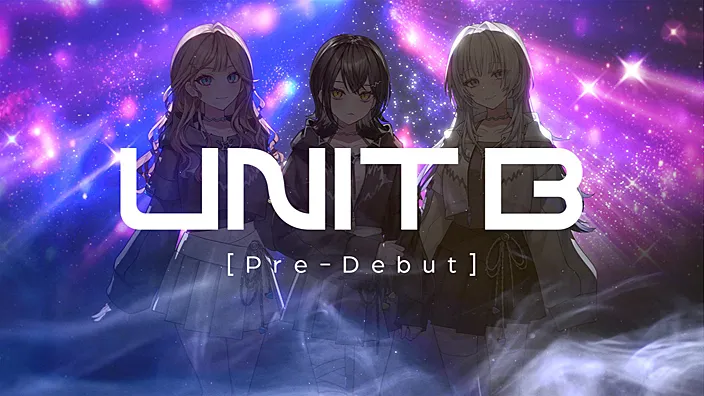
While no concrete information has been released regarding the Director of UNIT B right after their debut, I suspect these roles are being filled by internal Cover employees, rather than external agency contractors or freelancers.
Think about it: If UNIT B fails to meet its goals and the project is terminated and disbanded, any data and institutional knowledge gained during that period would be lost if left in external hands. If the Director is a Cover employee, that valuable know-how stays within the company, allowing them to refine the process, recruit new trainees, and try again.
Granted, there is a chance that both the trainees and the Director get swapped out if a unit fails. Even then, the “former Director” can support the next iteration from a different internal position. Even if they don’t, the experience remains institutionalized within Cover. From a system-design standpoint, this is incredibly pragmatic.
Some might argue, “That’s horrible, they’re treating talent candidates like disposable assets.” Indeed, a lot of the current backlash stems from this exact sentiment. However, Cover is undoubtedly well aware of this risk. It is up to the fans to accept this reality and decide whether they want to support the project or not.
A Brief Aside: ReGLOSS’s 2.5 Million Subscriber Challenge
As a quick side note regarding hololive’s directorial/producer-led initiatives, we can look at “ReGLOSS,” the first unit from the hololive DEV_IS branch. They recently ran a high-stakes campaign to hit a cumulative 2.5 million YouTube subscribers across the unit.
Ideally, this should be discussed in tandem as a point of comparison for mekPark. However, doing so would make this article far too long and potentially derail the topic, so I will skip it for now. If you’re interested, it’s definitely worth looking up.
Impressions of UNIT B’s First Stream
I tuned into UNIT B’s debut stream myself.
To be perfectly blunt, the quality definitely felt like that of “trainees,” but it was clear that they aren’t aiming to just be standard variety streamers. Given that UNIT B is explicitly striving to debut as a musical unit, that shouldn’t come as a surprise.
Ultimately, much of mekPark’s appeal lies in watching its members grow. The real entertainment value will come from watching how much they can improve their talking skills and what kind of musical content they can pump out from here on out.
The real challenge, however, will be whether they can grow at a pace that satisfies — or is tolerated by — the audience.
In today’s entertainment landscape, audiences increasingly expect strong value for both their money and their time. Fans might drop off if the growth feels stagnant. Personally, a two-year maximum project window feels a bit dragged out, and I predict Cover won’t actually let it drag on that long if things aren’t working.
In any case, Yoinagi Neon(宵凪ネオン), who emerged as the driving force behind the group’s debut stream, seems very comfortable on the mic. For the foreseeable future, she will likely be the one driving the unit’s banter and talk segments (in fact, she was the first to do an individual stream).
Key Points to Watch in mekPark Moving Forward
As we keep an eye on mekPark, here are the core elements I believe are worth watching. You don’t need to overthink it — just follow your gut on whether to support them — but keeping these points in mind might make your viewing and theory-crafting a lot more engaging.
ACHRORA’s Debut
The trajectory of mekPark’s other unit, ACHRORA (アクロラ), is a major focal point. Depending on what ACHRORA actually does, the operational differences between them and UNIT B will highlight Cover’s true intentions for mekPark.
Furthermore, unlike UNIT B, ACHRORA lacks the “Pre-debut” disclaimer in their branding. Will they be executing mekPark’s missions as a fully debuted unit right out of the gate?
[Update: 6/15/2026] ACHRORA’s official debut date has been locked in for June 26.
Disclosure of Director Information
This is a personal point of interest to test my own hypothesis. Seeing whether these Directors are internal or external, and how much they step into the limelight (or stay hidden) during unit activities, will be a massive clue into the true nature of mekPark.
The Exact Criteria for UNIT B’s Official Debut
While Cover has announced that there are specific promotion requirements for UNIT B to officially debut, the exact details have yet to be disclosed.
If the bar is set too low, critics will call it a predetermined kayfabe. If it’s too high, people will accuse Cover of never intending to debut them at all. Finding the sweet spot will be critical for the project’s reputation.
[Addendum] Applications for the 2nd mekPark Audition Have Begun
On June 5, 2026, Cover surprisingly announced and opened applications for the second round of mekPark auditions. Judging by the application timeline, their subsequent debut would be late this year at the earliest, but more realistically sometime in 2027. We can view this as a positive sign that Cover intends to sustain this project well into next year and beyond.
(Sources: Real Sound Tech、Cover)
Disclosure: This article was written by the author based on original research and analysis. Google Gemini and ChatGPT were used to assist with editing, organization, and English-language refinement.