 XRメモランダム
If you watch Japanese VTuber streams from overseas, you’ve probably come across phrases and customs that feel confusing, funny, or downright mysterious.
This article breaks down some of the most common cultural references, slang, and unwritten rules in the Japanese VTuber scene. It’s written exclusively in English and may be updated in the future.
Table of Contents
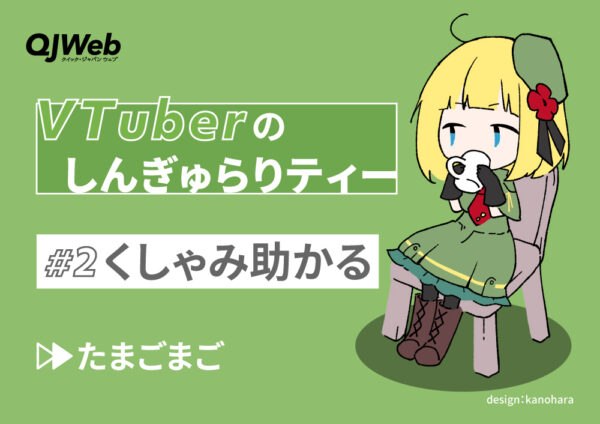
1: What Does “Kushami Tasukaru” Mean in Japanese VTuber Streams?
When a VTuber sneezes on stream without muting, chat may flood with comments like:
“Kushami tasukaru.” (くしゃみ助かる)
Literally, it means “Your sneeze helped me,” but that translation misses the point.
In Western cultures, saying “(God) bless you” after someone sneezes is polite and socially expected. Because “kushami tasukaru” appears in a similar context, many overseas fans assume it means the same thing. It doesn’t.
In fact, the phrase carries a slightly vulgar undertone — closer to “I enjoyed hearing that sneeze.”
For that reason, you should never use it in real-life situations as a substitute for “bless you,” unless you’re prepared for awkward reactions.
For a deeper discussion of this phrase, see the following article (in Japanese).
2: Why Does “Sensitive” Mean NSFW in Japanese VTuber Culture?
When Japanese VTubers say “sensitive” (センシティブ) on stream, they usually mean “lewd” or “NSFW.”
One widely accepted explanation comes from X (formerly Twitter). In Japan, content labeled as “sensitive” on X often consists of erotic illustrations or images. Over time, this association led many people to equate “sensitive” with “lewd.”
Another factor is linguistic confusion: “sensitive” is sometimes mistaken for “sensual” by non-native English speakers.
Actually, the topics that are truly “sensitive” in the Japanese entertainment scene are politics, religion, and baseball.
3: What Does “w” or “kusa” Mean in Japanese Internet Slang?
The Japanese verb for “to laugh” is warau (笑う). The letter “w,” taken from the word’s initial, became shorthand for laughter in online chats.
People often repeat it — “www” — to amplify the effect. Because multiple “w”s resemble blades of grass, the expression evolved into kusa (草), meaning “grass.” When spoken aloud, people literally say “kusa.”
When the laughter escalates to absurd levels, fans sometimes say dai-sōgen (大草原, “a vast grassland”). Roughly speaking, kusa corresponds to “lol,” while dai-sōgen is closer to “lmao.”
Some English-speaking fans even jokingly say “big kusa,” borrowing the Japanese logic directly.
Unlike “w,” which usually appears at the end of a sentence, kusa can be used more freely in casual conversation — though never in formal contexts.
4: What Is “Oshi”? Meaning in Japanese Fan and VTuber Culture
Oshi (推し) comes from the verb osu (推す), meaning “to support” or “to recommend.”
Today, oshi refers to the person you passionately support — your favorite idol, actor, athlete, or VTuber.
In the VTuber community, fans call their favorite talent their oshi or oshi-mem (推しメン, “oshi member”). Supporting an entire group rather than an individual is called hako-oshi (箱推し).
The term oshi-katsu (推し活) describes all activities related to supporting your oshi: watching streams, attending events, buying merchandise, and more.
In English, the closest equivalents are “fav” or “fave,” though neither fully captures the emotional intensity of oshi.
5: What Does “Tensei” Mean in the VTuber Space?
In the Japanese VTuber scene, tensei (転生) refers to ending one identity and reappearing as a new character.
The word originates from the Buddhist concept of reincarnation (輪廻転生, rinne-tenshou), but VTuber tensei has little to do with religion. Instead, it’s largely driven by business realities.
In many cases, a VTuber’s name, design, and persona are owned by their agency as intellectual property. When a VTuber leaves an organization, they often cannot reuse that character, forcing them to debut again with a new identity.
That said, exceptions are becoming more common. Some VTubers transfer between companies or continue their careers independently without changing their identities, usually by negotiating or purchasing the rights.
Among Japanese fans, however, it is generally considered taboo to publicly refer to a reincarnated VTuber by their former name.
6: What Is “Okimochi”? Meaning in Japanese VTuber Drama
Okimochi (お気持ち) literally means “feelings” or “sentiments.”
The phrase okimochi hyōmei (お気持ち表明) refers to publicly expressing one’s feelings — often in the form of criticism or frustration.
In the VTuber world, this usually happens when a VTuber addresses harassment from viewers or voices dissatisfaction with their agency.
Such statements reflect personal perspectives and are not always objectively accurate. When a VTuber makes an okimochi hyōmei, it’s wise to listen carefully but also consider multiple viewpoints before forming conclusions.
Because these statements can harm reputations — both of agencies and of VTubers themselves — there is a growing tendency to avoid making them too casually.
7: (Still writing ….)
Why Japanese VTuber Slang Is Hard to Translate
Japanese VTuber slang is shaped by a combination of language, internet memes, and industry practices. Many expressions carry emotional or cultural nuances that cannot be translated directly into English.
Understanding these terms not only helps overseas fans enjoy streams more but also prevents misunderstandings in online communities.
As Japanese VTubers continue to gain global popularity, familiarity with this slang is becoming increasingly valuable.
Disclosure: This article was written by the author based on original research and analysis. Google Gemini and ChatGPT were used to assist with editing, organization, and English-language refinement.